
Introduction
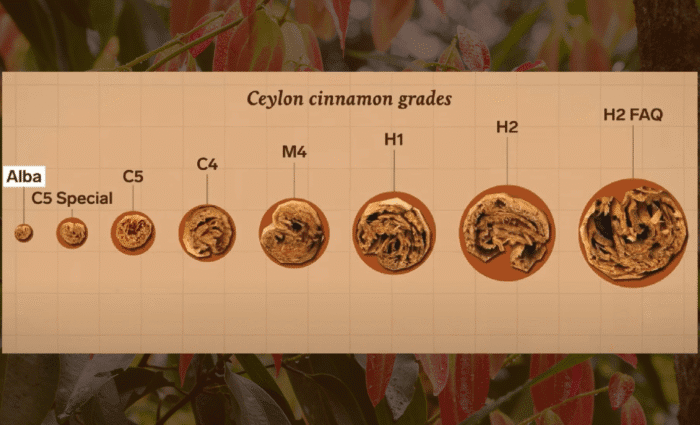
Ceylon cinnamon, also known as “true cinnamon”, is one of Sri Lanka’s most prized exports. Unlike cassia cinnamon, Ceylon is softer, sweeter, and packed with delicate layers of bark that give it a premium status worldwide. But not all Ceylon cinnamon is the same — it’s classified into different grades, based on the quality, thickness, and appearance of its quills.
These grades help traders, chefs, and consumers choose the right cinnamon for their needs — whether it’s gourmet cooking, commercial use, or grinding into powder. Let’s explore the grading system in detail.
🌿 How Ceylon Cinnamon is Graded
After harvesting, skilled peelers carefully remove and roll the delicate inner bark into long, thin quills. Once dried, the quills are sorted according to:
- Diameter of the quill
- Thinness and smoothness of the bark
- Color (golden, light brown, or darker shades)
- Aroma and sweetness
- Uniformity and appearance
The thinner, smoother, and lighter the quill — the higher the grade.
🏆 Main Grades of Ceylon Cinnamon
1. Alba Cinnamon – The Finest Grade
- Diameter: Less than 6 mm (very thin quills)
- Color: Light golden brown
- Texture: Smooth, paper-thin layers
- Aroma & Flavor: Sweet, delicate, refined
- Uses: Luxury teas, desserts, high-end culinary creations, premium exports
- Price: Most expensive and rare — represents the top 1–2% of production
✨ Alba is considered the “gold standard” of Ceylon cinnamon.
2. C5 Special and C5
- Diameter: 6–7 mm
- Color: Golden brown, very uniform
- Aroma: Strong yet balanced, slightly spicier than Alba
- Uses: Premium cooking, teas, bakeries, and global exports
- Price: Slightly more affordable than Alba, but still high-grade
📌 Fun Fact: C5 Special is the most demanded grade in international gourmet markets after Alba.
3. C4 Cinnamon
- Diameter: 7–9 mm
- Appearance: Light brown, smooth, fairly uniform
- Flavor: Sweet-spicy balance with a warm aroma
- Uses: Everyday cooking, tea, desserts, and home use
- Availability: Widely used as a mid-range grade for both local and export markets
👉 C4 is often considered the “best balance” between quality and affordability.
4. M Grades (M5, M4, M3)
- Origin: Called Mexican Grades because they are popular in Latin American markets
- Diameter: 9–15 mm (thicker than C grades)
- Appearance: Darker, slightly coarse texture
- Flavor: Stronger, more pungent than C4/C5
- Uses: Food manufacturing, restaurants, powdered cinnamon, wholesale trade
- Price: Mid-range, affordable, good for bulk buyers
5. H Grades (H1, H2, H3)
- Origin: Known as Hamburg Grades, favored in European bulk markets
- Diameter: 15 mm+, made of thick bark
- Appearance: Rough, less uniform, darker brown
- Flavor: Strong, spicy, slightly woody
- Uses: Industrial processing, extraction of oils, grinding into powder
- Price: Cheaper than C and M grades, used mostly in large-scale food and beverage industries
6. Quillings and Chips
- Quillings: Broken pieces and small fragments left during quill preparation.
- Chips: Outer bark and thicker pieces.
- Appearance: Irregular, mixed sizes.
- Uses: Ideal for cinnamon powder, infusions, oils, and extracts.
- Price: Least expensive grade, widely used in bulk spice production.
📊 Comparison Table of Cinnamon Grades
| Grade | Diameter | Color & Texture | Aroma/Flavor | Common Uses | Price Range |
| Alba | < 6 mm | Light golden, very smooth | Sweet, delicate, refined | Luxury teas, desserts, gourmet dishes | Very High |
| C5 Special | 6–7 mm | Golden brown, uniform | Sweet, aromatic | Premium cooking, export markets | High |
| C4 | 7–9 mm | Light brown, smooth | Sweet & spicy balance | Daily cooking, tea, desserts | Medium-High |
| M Grades | 9–15 mm | Darker, coarser | Strong, spicier | Bulk use, restaurants, powders | Medium |
| H Grades | 15 mm+ | Rough, dark, less uniform | Strong, woody, pungent | Industrial use, oils, grinding | Low-Medium |
| Quillings | Mixed fragments | Irregular, broken pieces | Aromatic but uneven | Powder, infusions, extracts | Low |
| Chips | Outer bark | Hard, rough | Strong, bitter notes | Oil extraction, spice blends | Lowest |
🌍 Which Grade Should You Choose?
- For Luxury & Gourmet Use → Alba or C5 Special
- For Daily Cooking → C4 or C5
- For Bulk & Industrial Use → M or H Grades
- For Powder or Extracts → Quillings and Chips
Conclusion
Ceylon cinnamon comes in a wide range of grades, each serving a unique purpose. While rare grades like Alba are highly sought after, the H1 and H2 grades you’ll find at Cinnamon Aura are excellent choices for daily cooking, teas, powders, and even commercial use.
With their rich aroma, robust flavor, and affordability, H1 and H2 provide the perfect balance between quality and value. Whether you’re a home cook, café owner, or a food manufacturer, these grades deliver the authentic taste of Sri Lanka’s heritage in every dish.
👉 At Cinnamon Aura, we proudly offer H1 and H2 grade Ceylon cinnamon, sustainably cultivated and carefully prepared to preserve the natural essence of this treasured spice.
